Workshops & Internships
Hands-on workshops and internship experiences to build practical skills, emotional resilience, and professional insight.
At Ameera Wellness, our offerings are tailored for students, educators, corporate teams, caregivers, and psychology enthusiasts looking for experiential learning and mentorship.
Who Are These Workshops & Internships For?
Students & Colleges
Academic stress, emotional regulation, self-esteem, career anxiety
Schools & Educators
Classroom behavior, mental health awareness, emotional literacy
Corporate Teams
Workplace stress, burnout prevention, team communication
Caregivers & Families
Caregiver burnout, emotional resilience, boundary setting
Psychology Students
CBT basics, case conceptualization, practical skill building
Workshop Categories
Emotional Wellbeing & Resilience
- Managing Overthinking
- Anxiety Awareness & Coping Skills
- Building Emotional Resilience
- Self-Esteem & Confidence Building
- Stress Management Techniques
CBT & Psychological Skills Training
- Introduction to CBT
- Thought Restructuring Techniques
- Behavioral Activation
- Case Conceptualization Basics
- Cognitive Distortions in Daily Life
Caregiver & Family Workshops
- Understanding Caregiver Burnout
- Emotional Boundaries in Families
- Communication Skills
- Supporting Children’s Emotional Health
Corporate Mental Health Programs
- Burnout Prevention
- Emotional Intelligence at Workplace
- Conflict Resolution
- Work-Life Balance Strategies
Workshop Format Options
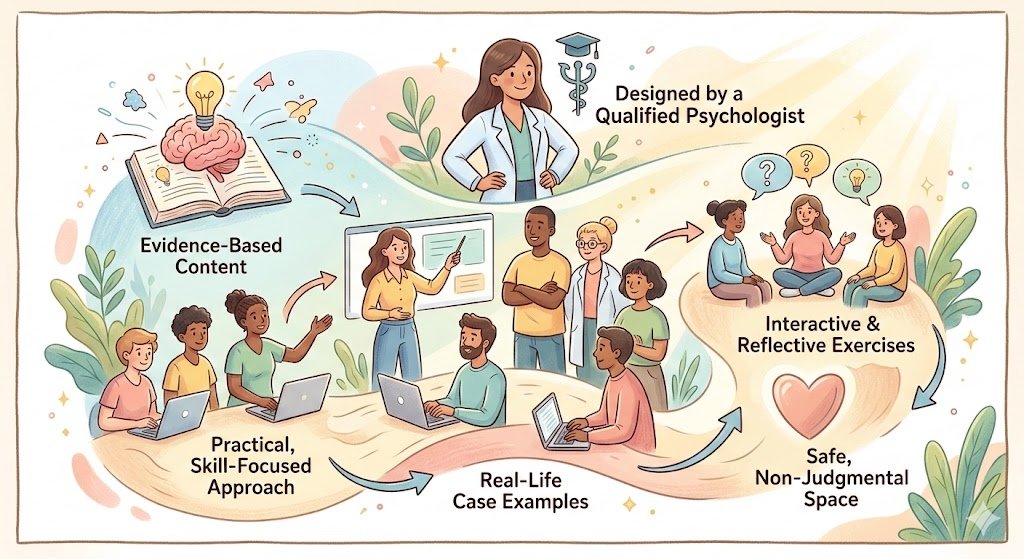
What Makes Our Workshops & Internships Different?
- Evidence-Based Content
- Practical, Skill-Focused Approach
- Interactive & Reflective Exercises
- Safe, Non-Judgmental Space
- Designed by a Qualified Psychologist
- Real-Life Case Examples
🌿 Sample Workshop Structure
Each workshop at Ameera Wellness follows a structured, evidence-based format designed to be engaging, reflective, and skill-oriented — not just lecture-based.
🕒 1️⃣ Introduction & Icebreaker
The session begins by creating a psychologically safe and welcoming environment.
This includes:
- Warm introduction of facilitator and participants
- Establishing ground rules (confidentiality, respect, openness)
- Brief check-in question related to the theme
- A light interactive icebreaker activity
Example:
For an anxiety workshop: "What is one word that describes how stress feels in your body?"
Purpose:
- Reduce initial hesitation
- Build comfort and connection
- Normalize shared experiences
- Set a collaborative tone
🧠 2️⃣ Understanding the Core Concept
This segment introduces the psychological foundation of the workshop topic.
Content includes:
- Clear explanation of the key concept (e.g., anxiety, burnout, cognitive distortions)
- Simple psychological models (CBT framework, stress response cycle, etc.)
- Real-life relatable examples
- Visual aids or slides for clarity
Example (for CBT workshop):
- How thoughts influence emotions
- The cognitive-behavioral cycle
- Common thinking patterns
Purpose:
- Build conceptual clarity
- Reduce stigma through understanding
- Shift from emotional overwhelm to structured insight
- This section is informative but conversational — never overwhelming
🎯 3️⃣ Interactive Activity
Learning becomes meaningful when participants apply it.
Activities may include:
- Small group discussions
- Thought-record exercises
- Stress trigger mapping
- Role-play communication practice
- Scenario-based problem solving
- Emotional awareness worksheets
Example:
Participants identify a recent stressful situation and analyze:
- What happened?
- What thought came up?
- What emotion followed?
- What action was taken?
Purpose:
- Encourage active participation
- Transform theory into personal insight
- Increase engagement and retention
🛠 4️⃣ Skill Demonstration
This section focuses on practical tools participants can implement immediately.
Depending on the topic, this may include:
- Guided breathing or grounding exercise
- Cognitive restructuring demonstration
- Boundary-setting script modeling
- Assertive communication framework
- Behavioral activation planning
- Stress regulation techniques
The facilitator demonstrates the technique step-by-step and explains:
- When to use it
- Why it works
- Common mistakes
- How to adapt it to daily life
Purpose:
- Equip participants with usable strategies
- Increase confidence in applying skills independently
- Provide a clear take-home method
🌸 5️⃣ Guided Reflection
Participants are given quiet time to reflect individually.
Reflection prompts may include:
- What did I learn about myself today?
- Which strategy feels most practical for me?
- What small change can I start this week?
- What belief might I need to challenge?
This can be done through:
- Written reflection
- Silent contemplation
- Voluntary sharing
Purpose:
- Deepen internal processing
- Encourage self-awareness
- Create emotional integration of learning
- This segment brings depth and meaning to the session
💬 6️⃣ Q&A + Takeaway Toolkit
The session closes with:
- Open Q&A discussion
- Clarification of doubts
- Addressing personal concerns within safe limits
- Summary of key learning points
Participants receive a Takeaway Toolkit, which may include:
- Printable worksheets
- Summary slides
- Reflection prompts
- Resource list
- Self-practice exercises
- Recommended reading
Purpose:
- Reinforce learning
- Provide continued support beyond session
- Leave participants feeling empowered and equipped
Every workshop is designed not just to inform — but to transform insight into practical psychological skill.
Upcoming Workshops
Upcoming workshops will be announced soon. Join our mailing list to stay updated.