Building Competence Beyond the Classroom
Clinical psychology extends far beyond textbooks and examinations. While theoretical knowledge forms the backbone of psychological education, it is the ability to apply that knowledge with empathy, ethical awareness, and sound clinical judgement that transforms students into competent professionals.
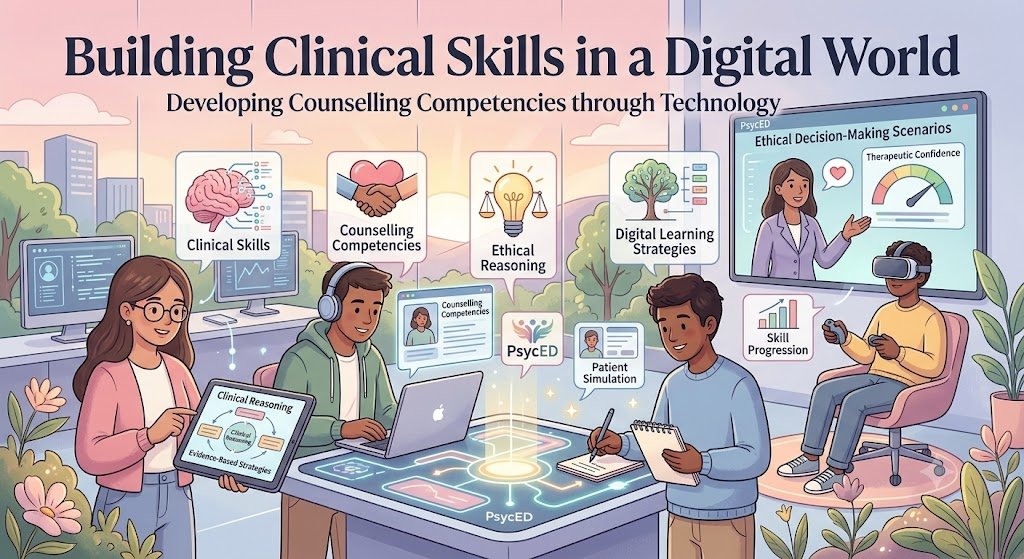
Today's psychology students have access to digital tools, virtual supervision, online case discussions, simulation-based learning and evidence-based research databases. These innovations provide opportunities to develop practical competencies even before entering professional practice.
Why Clinical Skills Matter
Clinical competence combines knowledge, therapeutic communication, ethical reasoning, assessment skills and reflective practice. Students who actively develop these competencies feel more prepared for internships, supervised practice and future clinical roles.
Critical Thinking
Analyse client presentations using evidence-based reasoning rather than assumptions.
Empathy
Develop the ability to understand emotions without losing professional objectivity.
Communication
Learn effective questioning, active listening and rapport building.
Ethics
Respect confidentiality, informed consent and professional boundaries.
85%
Students report greater confidence after supervised role-play sessions.
72%
Improved interviewing skills through regular clinical practice.
90%
Professionals recommend reflective journaling during training.
Learning Psychology in the Digital Era
Technology has transformed psychological education by providing opportunities for students to observe therapy sessions, complete interactive assessments, participate in virtual supervision and collaborate with professionals across the globe.
💡 Clinical Insight
Digital tools should complement—not replace—real human interaction. Clinical judgement develops through observation, supervision and continuous reflective practice.
| Traditional Learning | Digital Learning |
|---|---|
| Classroom lectures | Interactive video modules |
| Paper assessments | Digital psychological tools |
| Limited supervision | Virtual mentoring sessions |
| Library resources | Global research databases |
The Journey Towards Clinical Competence
Theory
Understand psychological concepts and evidence-based interventions.
Observation
Watch experienced clinicians and analyse sessions.
Practice
Conduct supervised interviews and role-plays.
Reflection
Evaluate strengths, weaknesses and learning goals.
Professional Growth
Continue lifelong learning and ethical development.
Practical Tips for Psychology Students
Read Research Weekly
Stay updated with recent evidence-based practices.
Reflect Daily
Maintain a professional reflection journal.
Seek Supervision
Regular feedback accelerates skill development.
Practice Empathy
Listen actively before attempting to solve problems.
Study Case Formulations
Understand the reasoning behind treatment planning.
Never Stop Learning
Professional development is a lifelong journey.
Further Reading
The following resources provide deeper insights into clinical psychology, counselling skills and evidence-based practice.