In a world that constantly pulls your attention in every direction, mindfulness invites you back to one place — the present moment.
You don’t need hours of meditation or a perfectly quiet room to practice mindfulness. You simply need awareness.
If you’re new to mindfulness, the journey can begin with small, simple daily steps.

What Is Mindfulness?
Mindfulness is the practice of paying attention to the present moment — intentionally and without judgment.
It means noticing:- Your thoughts
- Your emotions
- Your body sensations
- Your surroundings
without trying to immediately change or control them.
Mindfulness is not about emptying your mind. It’s about observing it.
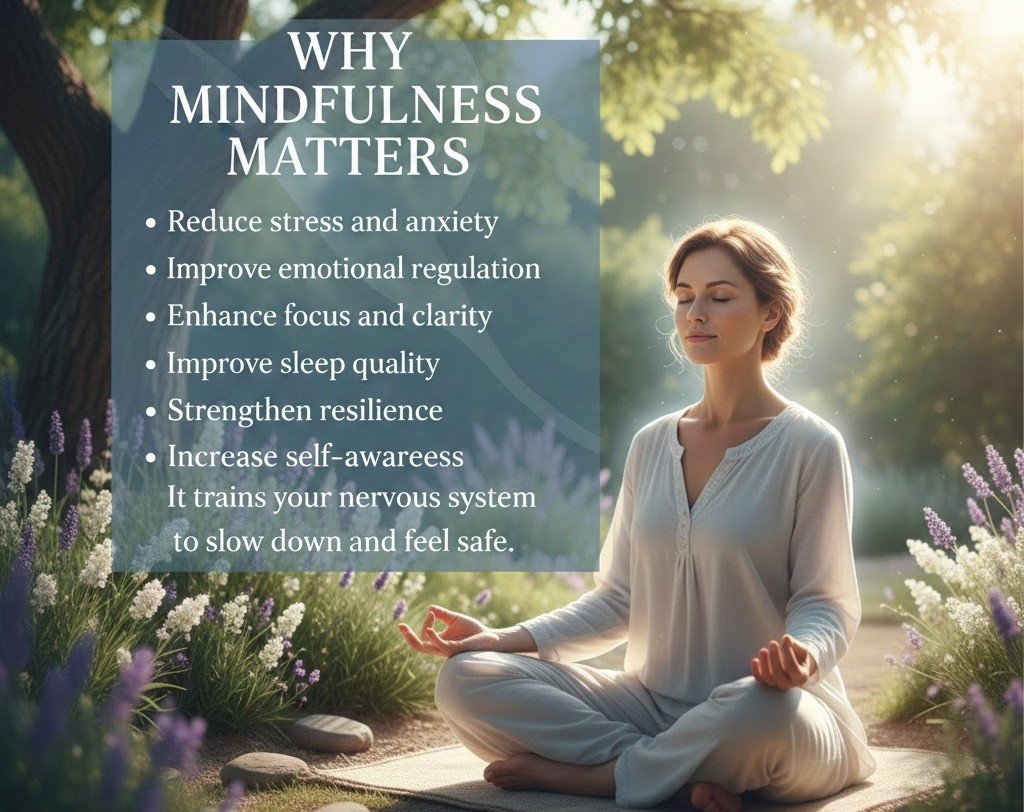
Why Mindfulness Matters
Regular mindfulness practice can:
- Reduce stress and anxiety
- Improve emotional regulation
- Enhance focus and concentration
- Increase self-awareness
- Strengthen resilience
- Improve sleep quality
It trains your nervous system to slow down and feel safe.
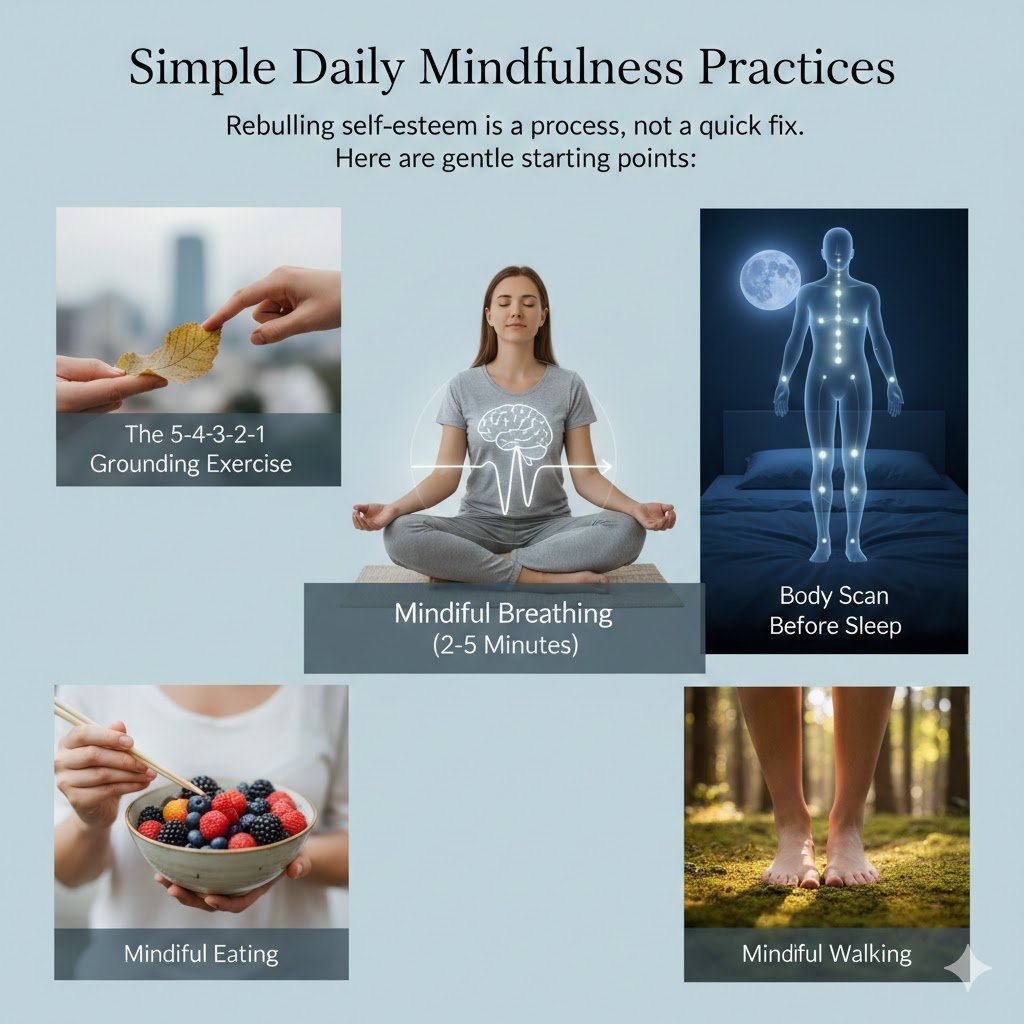
Simple Daily Mindfulness Practices
Rebuilding self-esteem is a process, not a quick fix. Here are gentle starting points:
- Mindful Breathing (2–5 Minutes)
Focus on your breath, observing each inhale and exhale without judgment. This simple practice can calm your nervous system and bring you back to the present moment. - The 5-4-3-2-1 Grounding Exercise
Notice 5 things you can see, 4 things you can touch, 3 things you can hear, 2 things you can smell, and 1 thing you can taste. This exercise helps anchor you in the present moment. - Mindful Eating
Pay attention to your food without distractions. Notice flavors, textures, and how your body feels. - Body Scan Before Sleep
Scan your body from head to toe, noticing any tension or sensations. This practice helps release physical and mental stress before bed. - Mindful Walking
Walk slowly and deliberately, paying attention to each step and your surroundings. This practice helps you stay present and grounded.

Building a Sustainable Habit
Start small:
- 2 minutes a day
- Attach it to an existing routine (after brushing your teeth, before sleep, during tea time)
- Be patient and compassionate with yourself.
- Be consistent, not perfect
Mindfulness grows through repetition.
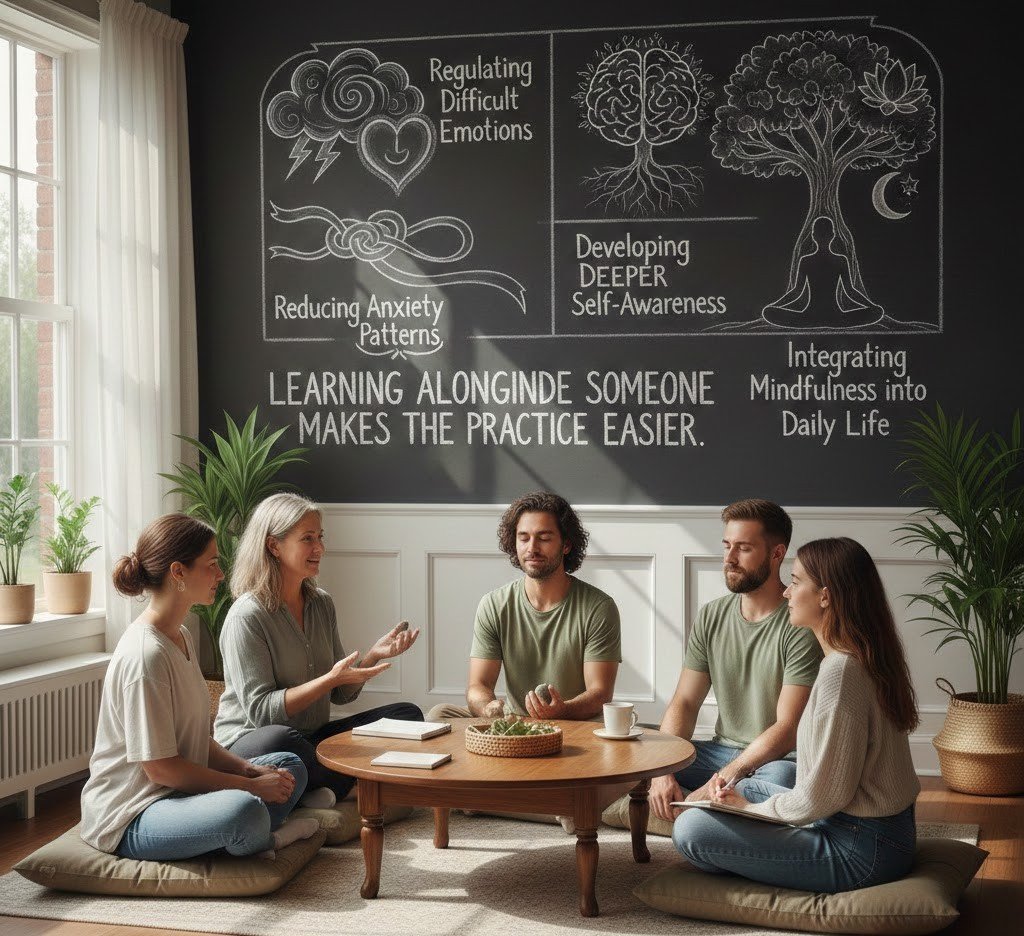
When to Seek Additional Support
If you struggle with intense anxiety, intrusive thoughts, or emotional overwhelm, guided mindfulness in therapy can be helpful.
A trained professional can support you in:
- Regulating difficult emotions
- Reducing anxiety patterns
- Developing deeper self-awareness
- Integrating mindfulness into daily life
Sometimes learning alongside someone makes the practice easier.
A Gentle Reminder
You don’t have to fix everything today.
You don’t have to control every thought.
You only have to return — again and again — to this moment..
Mindfulness is not about becoming someone new.
It’s about coming back to yourself.
At Ameera Wellness, we guide individuals in building simple, practical mindfulness tools that support emotional balance and everyday calm.