Anger is not the enemy.
It is a natural, human emotion — a signal that something feels unfair, hurtful, or threatening. The problem isn’t anger itself. The problem is how we express it.
When unmanaged, anger can damage relationships, harm mental health, and leave us feeling guilty or out of control. But when handled wisely, anger can become a powerful tool for clarity and change.
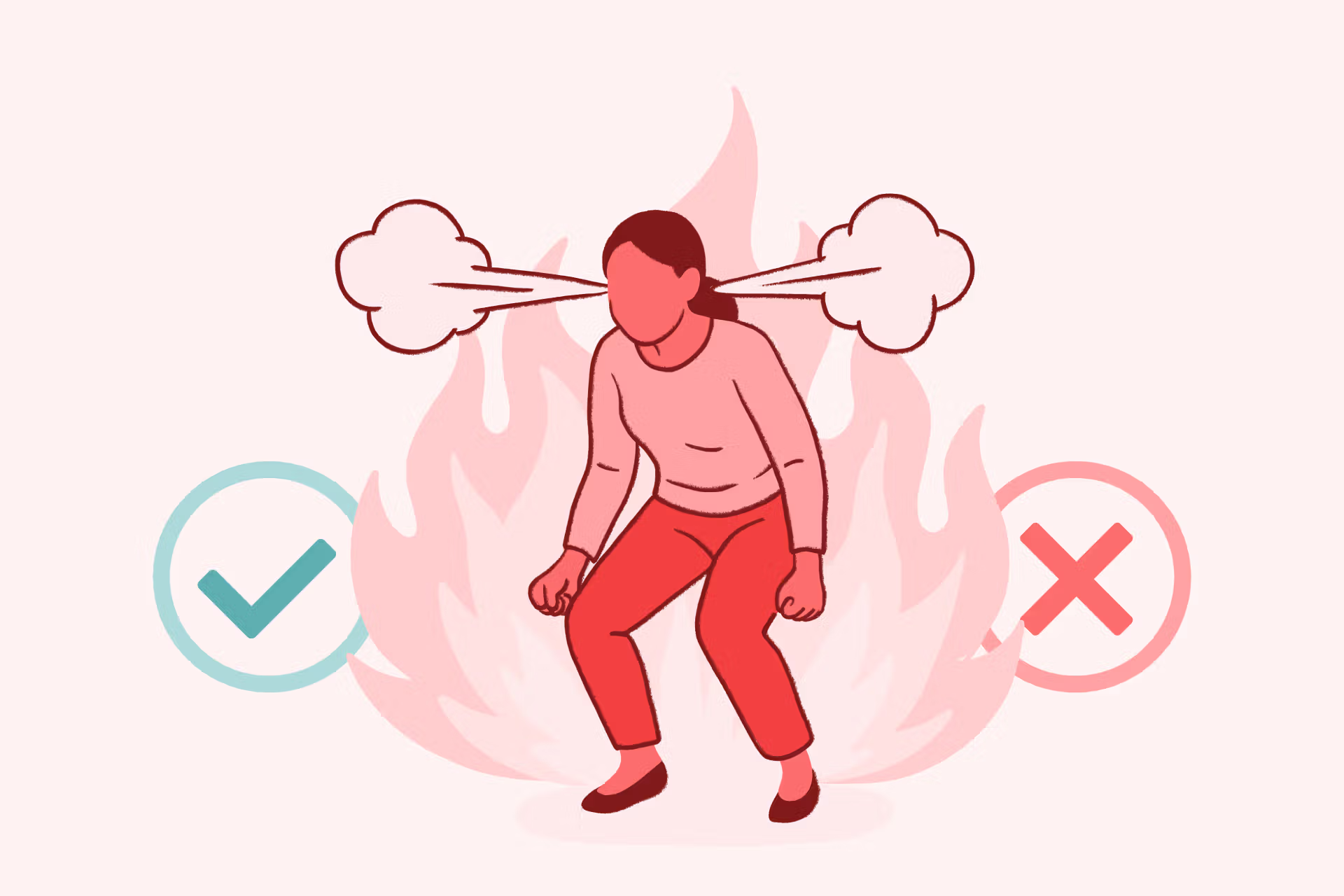
Understanding Anger
Anger is your mind and body’s response to perceived injustice, frustration, or boundary violation.
It may show up as:- Irritability
- Aggression or hostility
- Restlessness or tension
- Physical symptoms like clenched fists or a racing heart
- Impulsive reactions
- Withdrawal or silent treatment
Anger often sits on top of deeper emotions like hurt, fear, disappointment, or shame.
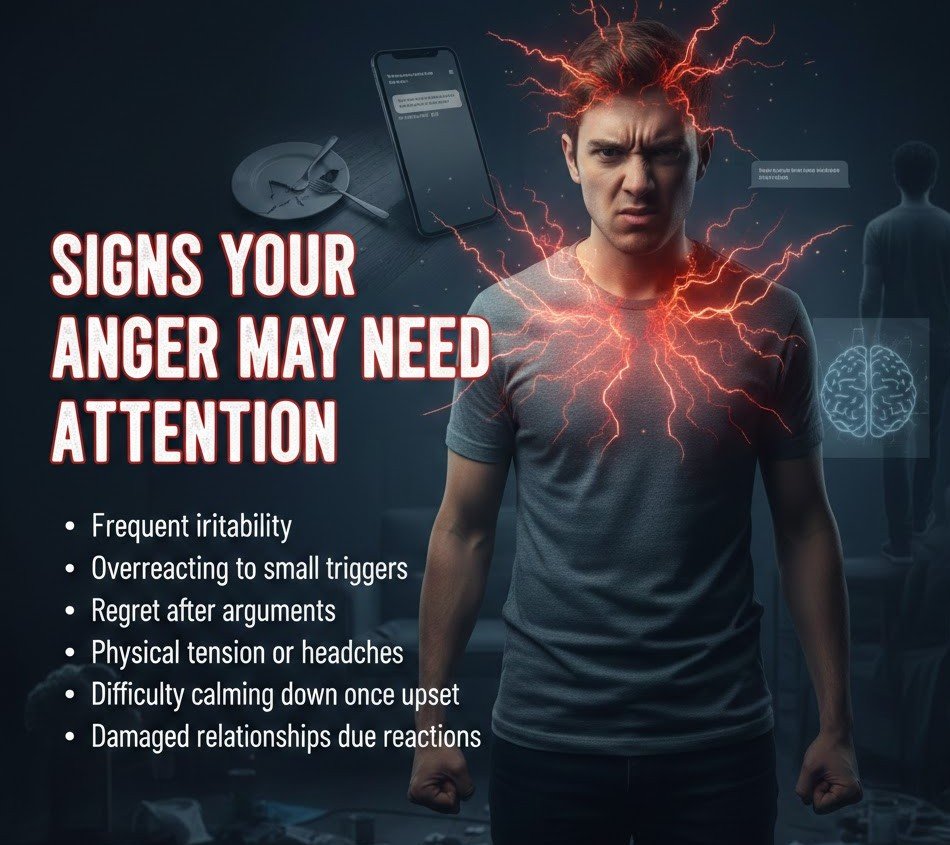
Signs Your Anger May Need Attention
You might notice:
- Frequent irritability
- Overreacting to small triggers
- Regret after arguments
- Physical tension or headaches
- Difficulty calming down once upset
- Damaged relationships due to reactions
These are signs your nervous system may be overwhelmed.
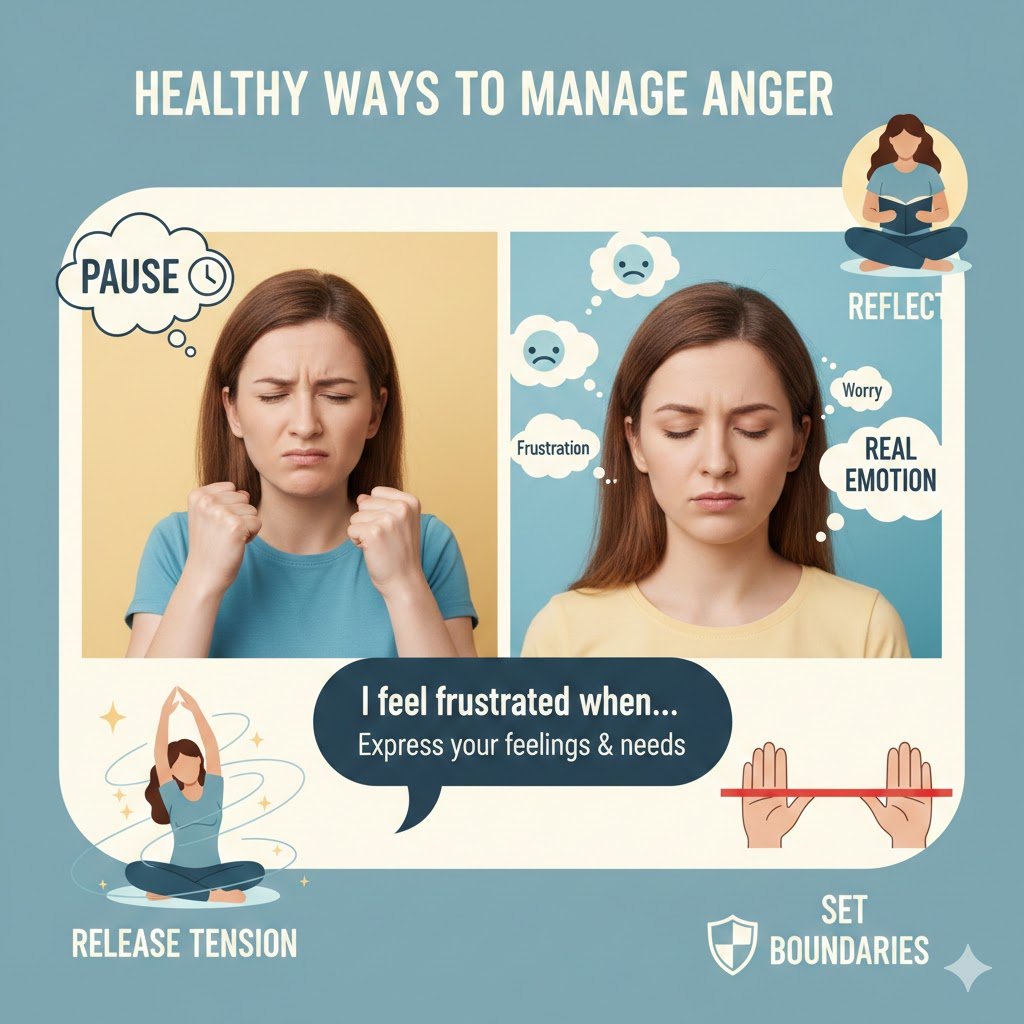
Healthy Ways to Manage Anger
- Pause Before Reacting
Take a moment to breathe and assess the situation before responding. This helps you avoid reacting impulsively. - Identify the Real Emotion
Anger is often a cover for deeper feelings like hurt, fear, or disappointment. Recognizing the underlying emotion helps you respond more effectively. - Use “I” Statements
Express your feelings and needs clearly and respectfully. For example, “I feel frustrated when…” instead of “You always…” - Release Physical Tension
Practice relaxation techniques like deep breathing, progressive muscle relaxation, or gentle stretching to release built-up tension. - Set Clear Boundaries
Saying “no” when needed protects your energy and reinforces self-respect. - Reflect After the Situation
Take time to reflect on what happened and how you responded. Consider what you learned and how you might handle similar situations differently in the future.
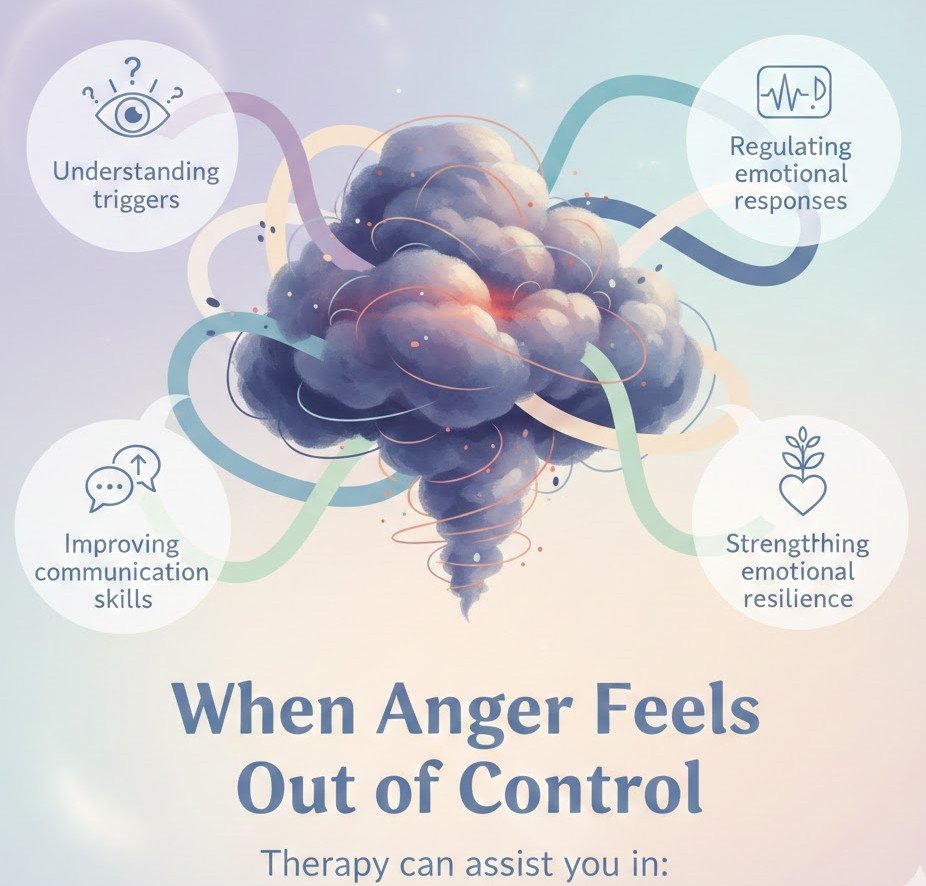
When Anger Feels Out of Control
If anger feels explosive, frequent, or overwhelming, professional support can help.
Therapy can assist you in:
- Identifying triggers and patterns
- Regulating intense emotions
- Building healthier coping strategies
- Improving communication skills
- Processing underlying trauma or pain
Anger often carries unprocessed pain. Healing reduces intensity.
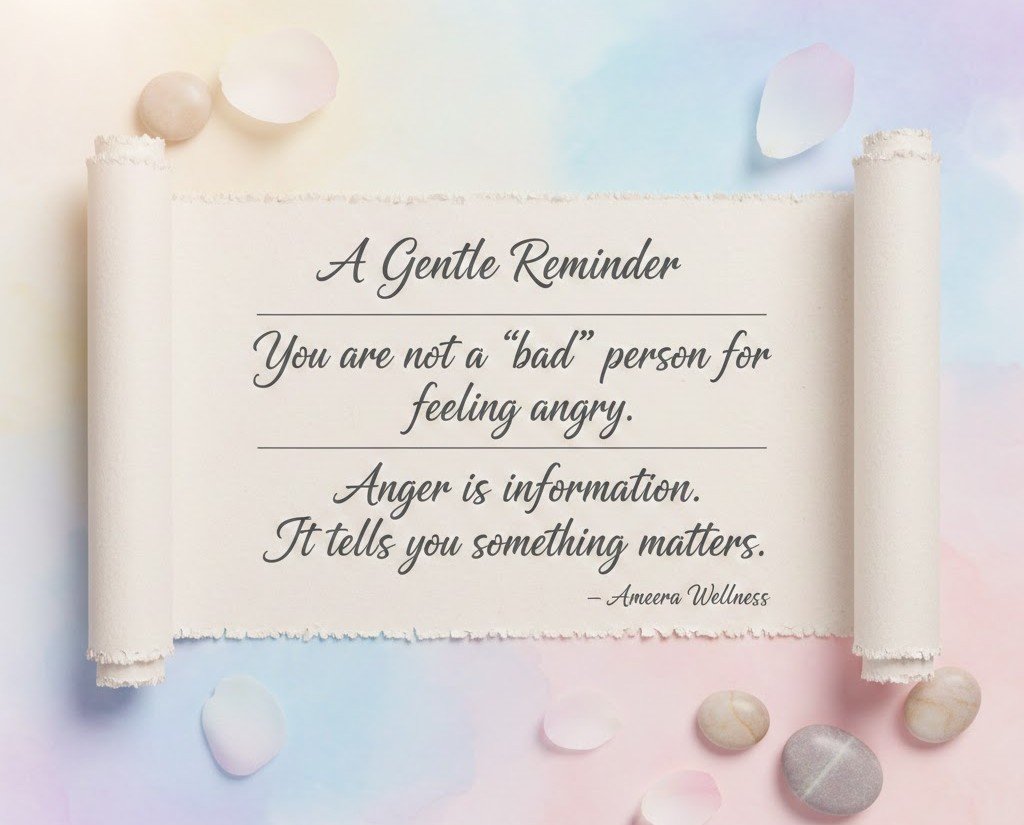
A Gentle Reminder
You are not a “bad” person for feeling angry.
Anger is information
It tells you something matters.
When expressed with awareness and respect, anger can strengthen boundaries, improve communication, and protect your well-being.
At Ameera Wellness, we support individuals in understanding their emotions deeply — so reactions become responses, and conflict becomes clarity.